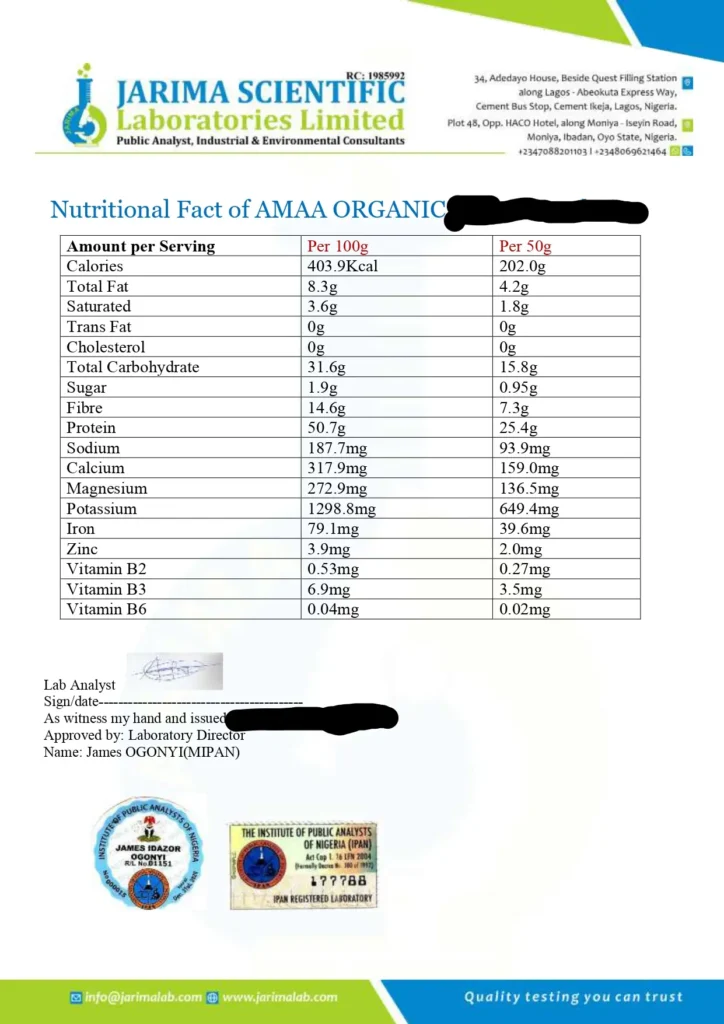




Every claim on an AMAA label traces back to this page. No marketing figures, no estimates, independent laboratory analysis, published in full.
What was tested, and by whom
AMAA’s finished formula was analysed by JARIMA Scientific Laboratories Limited, a NAFDAC-licensed public analyst laboratory in Lagos. Protein content was determined by the Kjeldahl method — the internationally accepted gold standard for protein measurement in food. The certificate below reports the full nutritional profile: eighteen nutrients, including 50.7g of protein, 14.6g of fibre, and 79.1mg of iron per 100g.
How to read it
Laboratory certificates report values per 100g of product. One AMAA scoop is 50g — so your serving delivers exactly half of each certificate figure: 25.4g of protein, 7.3g of fibre, 39.6mg of iron. 18 nutrients total.
Seven (7) certified organic whole-food ingredients. Three variants. One standard: the best available.
Soya beans · Pumpkin Seed · Chia Seed · Sunflower Seed · Flaxseed · Almond · Groundnut·
Verify it yourself
We would rather you check than trust. The certificate number, the laboratory’s registered details, and the test dates are all visible on the document — anyone can contact JARIMA Scientific Laboratories directly to confirm its authenticity. AMAA is also NAFDAC approved.
If any brand makes you a nutritional promise, ask for their version of this page.
AMAA contains almond and groundnut. For guidance on how AMAA fits your diet — including for children, pregnancy, or any medical condition — speak with a healthcare professional.